
How Do You Buy Smart in a Soft Melbourne Market Where Underquoting, Off-Market Deals and Quiet Auctions All Collide?

A softer Melbourne market creates opportunity—but also more ways for buyers to misread value. Learn how to verify price guides, assess underquoting risk, compare private sales and auctions, evaluate off-market property and negotiate with a clear limit.
Treat a Melbourne property price guide as a starting point for research, not a ceiling. Victoria has strengthened its approach to underquoting, including new comparable-property guidelines introduced in late 2025, but buyers should still test the advertised range against recent sales of genuinely similar properties.
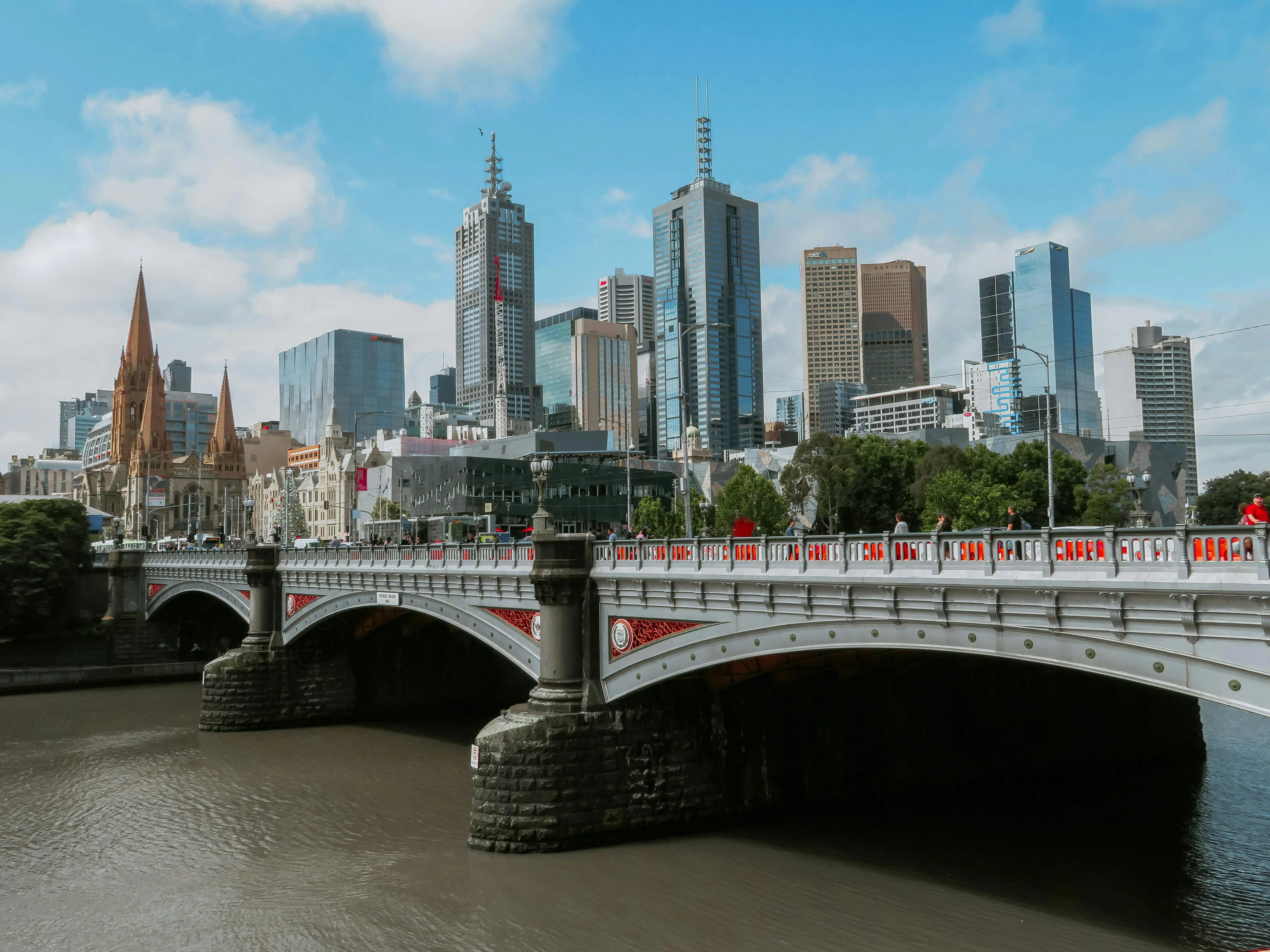
Melbourne’s auction market has also become noticeably quieter. Cotality recorded a final Melbourne auction clearance rate of 51.9% for the week ending 23 August 2026, compared with 70.9% in the same week a year earlier. The following week it recovered slightly to 53.7%, but remained well below 2025 levels.
For buyers, that can mean more negotiating room — provided you know what the property is actually worth, understand the sale method and set a firm limit before negotiations begin.
Why Melbourne Property Price Guides Can Still Mislead You
Under Victoria’s underquoting laws, an agent’s estimated selling price must be reasonable and take relevant comparable sales into account.
For Melbourne residential property, Consumer Affairs Victoria requires agents to consider the three properties they regard as most comparable. Comparable properties generally need to be of a similar standard or condition, have sold within the previous six months and be within two kilometres of the property being marketed.
Since November 2025, agents have also had to follow strengthened guidelines when deciding which sales are genuinely comparable. Consumer Affairs Victoria introduced the changes after its Underquoting Taskforce found cases where agents were selecting less similar, lower-priced properties instead of the strongest available comparables. (consumer.vic.gov.au)
Check the Statement of Information
Every Victorian residential property being sold through an estate agent must have a Statement of Information.
It includes the indicative selling price and, where sufficient comparable sales exist, the three comparable properties used by the agent. The document must be available with online advertising, at inspections and on request. (consumer.vic.gov.au)
Do not stop there.
Look for three to five recent sales yourself and compare:
land size
dwelling type
bedroom and bathroom count
condition and renovation quality
street and immediate location
school zone
parking
unusual advantages or disadvantages
accessibility or structural modifications.
Even apparently similar houses can justify different prices because of their condition or configuration. For example, professionally completed home accessibility modifications may make one property materially more functional for a buyer with mobility needs, while another apparently comparable house may require substantial work after purchase.
The question is not simply whether another three-bedroom house sold for $1.1 million. It is whether that house was genuinely comparable to the one you are considering.
How Strong Is Victoria’s Underquoting Enforcement?
Underquoting remains an active enforcement issue in Victoria.
In April 2026, a former Melbourne agency owner was ordered to pay $600,000 following an investigation by Consumer Affairs Victoria’s Underquoting Taskforce. The case involved properties advertised at prices the agency did not believe they would sell for.
Individual underquoting offences can also carry substantial penalties. Consumer Affairs Victoria says agents who fail to comply with certain underquoting requirements can face penalties of more than $48,000, while serious breaches can also result in forfeiture of commission. (consumer.vic.gov.au)
There is also an important protection buyers often miss: if a seller rejects a written offer because the price is too low, the agent must update the indicative selling price and any lower advertised price.
That gives buyers another reason to treat the current price guide as information that can change during a campaign rather than as a fixed prediction of the eventual sale price.
Auctions vs Private Sale in a Softer Melbourne Property Market
Melbourne remains Australia’s largest auction market, but the numbers in winter 2026 show a substantially weaker auction environment than a year earlier.
For the week ending 23 August, Melbourne held 594 auctions with a 51.9% final clearance rate, down from 70.9% a year earlier. Auction volumes were also nearly 40% below the equivalent week in 2025. (cotality.com)
That does not mean every auction is weak. Good properties in tightly held locations can still attract several determined buyers. But a market in which roughly half of reported auctions clear gives buyers a different negotiating environment from one in which seven out of ten sell.
What a Quiet Auction Can Tell You
A public auction gives you information that a private negotiation does not.
You can see:
how many people actually bid
where bidding begins to slow
whether the property reaches its reserve
whether the auctioneer is relying on vendor bids
whether the property is passed in.
If a property is passed in, the highest genuine bidder usually gets the first opportunity to negotiate with the vendor.
That can be valuable — but do not bid simply to earn negotiation rights unless you are comfortable buying at that price.
Auction Contracts Are Much Less Forgiving
A key difference between auction and private sale is contractual flexibility.
According to Consumer Affairs Victoria’s auction guidance, an auction purchase is generally unconditional. You cannot make your successful bid subject to finance, a building inspection or other conditions after the auction, and there is no cooling-off period.
That makes due diligence before auction day particularly important.
Have your finance, contract review, building and pest inspection and maximum price sorted before you raise your hand.
Why Private Sale Can Give Buyers More Room to Negotiate
With a private sale, price is only one part of the offer.
Consumer Affairs Victoria confirms that private-sale buyers can negotiate both price and contractual terms, including conditions such as finance or a satisfactory building inspection where the vendor agrees.
That gives buyers more ways to construct an attractive offer.
A vendor may prefer:
a particular settlement date
a larger or smaller deposit
fewer conditions
certainty around finance
a flexible possession date.
This is why the highest nominal offer is not automatically the strongest offer.
If one buyer offers $1.02 million with awkward conditions and another offers slightly less while giving the vendor exactly the settlement arrangement they need, the second offer may still succeed.
There is generally also a three-business-day cooling-off period for a qualifying private residential sale, although important exceptions apply — including purchases made within three clear business days before or after a publicly advertised auction. (consumer.vic.gov.au)
What Does “Off-Market” Property Actually Mean?
An off-market property is generally one being offered to potential buyers without a broad public advertising campaign.
An agent might contact people already in their database, approach buyer’s advocates or present the property quietly to selected buyers before deciding whether to launch a normal campaign.
There is no single official Victorian definition that makes an “off-market” property a distinct legal category. The usual property-sale and underquoting obligations can still apply when an estate agent is engaged to sell residential property.
In fact, Consumer Affairs Victoria states that an agent must prepare a Statement of Information for each residential property they are engaged to sell regardless of whether the property is publicly advertised. (consumer.vic.gov.au)
Off-Market Does Not Automatically Mean Cheap
This is the mistake buyers should avoid.
“Off-market” sounds like “discount”, but the two are not synonymous.
Without a full public campaign, you may face less visible competition — but you also have less public price discovery. There may be no auction crowd showing exactly how many buyers are willing to compete.
That makes your own comparable-sales research even more important.
An off-market opportunity is only a good deal if the price and terms are good relative to the property’s underlying value.
How to Negotiate in Melbourne’s Current Property Market
Start with evidence, not the quoted range.
Before submitting an offer, identify your strongest comparable sales and make adjustments for meaningful differences between them and the subject property.
Then decide three numbers:
Your opening offer — credible enough to start a serious conversation.
The price you believe represents fair value.
Your absolute walk-away price.
Do not invent the third number while negotiating.
Use Terms as Well as Price
In a softer market, terms can become an important negotiating tool.
If you know the vendor needs a 30-day settlement, six-month settlement or another specific arrangement and that timing also works for you, offering it can strengthen your position without increasing the purchase price.
The same principle applies to conditions.
But do not remove a finance, building-inspection or other protection simply to make an offer look stronger unless you fully understand the risk and have appropriate professional advice.
Be Careful With Pre-Auction Offers
A pre-auction offer can work particularly well where the vendor values certainty, but it can also reveal your level of interest and trigger competition.
Victorian agents generally have to present written and verbal offers to the vendor unless the vendor has instructed the agent otherwise in writing. If a vendor rejects your written offer purely because the price is too low, the agent may also have to revise the advertised price guide. (consumer.vic.gov.au)
One further trap: if you buy within three clear business days before a publicly advertised auction, the ordinary private-sale cooling-off period does not apply.
Is a Buyer’s Advocate Worth It in a Soft Market?
A softer property market does not automatically make buying simple.
In some respects, it can make price discovery harder because stock is split between auctions, private sales, expressions of interest, pre-market opportunities and properties that never receive a broad advertising campaign.
A buyer’s advocate can help by:
researching comparable sales
assessing the advertised price
inspecting properties
approaching agents for pre-market or off-market opportunities
negotiating price and settlement terms
bidding at auction
maintaining a predetermined buying limit when emotions rise.
Forge Real Estate offers buyer advocacy for Melbourne purchasers who want independent support across property search, assessment, negotiation and auction bidding.
The value of that service should ultimately be judged on whether the advice helps you make a better purchase decision — not simply whether it gives you access to properties labelled “off-market”.
The Bottom Line
Buying smart in a soft Melbourne property market starts by separating the advertised price, the market value and your maximum price.
They are three different numbers.
Victoria’s strengthened underquoting rules give buyers more protection, but they do not remove the need to research comparable sales. Melbourne’s recent auction clearance rates suggest buyers have more negotiating room than they did a year ago, but desirable properties can still attract serious competition.
At auction, use the bidding to read the market but never let the crowd set your limit.
In a private sale, negotiate the terms as well as the price.
And with an off-market property, remember that exclusivity is not evidence of value.
The strongest buyer is usually not the one with the best access to listings. It is the one who knows what the property is worth before the negotiation starts.
Forge Real Estate Melbourne can help you blueprint your future by finding the perfect blue-chip property where your lifestyle needs and investment goals converge.
📞 Phone: (03) 91003633
✉️ Email: info@forgeproperty.com.au
🌐 Website: www.forgerealestate.com.au
We offer specialized consultation and can assist in both Mandarin and Cantonese.
Related Articles

How Do You Know If You Overpaid for a House in Melbourne—and What Are Your Real Options?
Think you overpaid for a Melbourne house? Compare your purchase with genuinely comparable local sales, the circumstances of the transaction and current market evidence before deciding whether to hold, renovate or sell.

How Do You Win a Melbourne Auction When Clearance Rates Are Sitting Around 60%?
When Melbourne auction clearance rates sit around 60%, preparation matters more than emotion. Learn how to assess the suburb, review the contract, secure finance, set a bidding limit and negotiate after a pass-in.

Should You Buy Now or Wait in Melbourne After the RBA’s Rate Hold?
After the RBA held the cash rate at 4.35%, Melbourne buyers still face a timing decision. This guide weighs borrowing capacity, repayments, market softness, holding periods, cash buffers and property fundamentals.