
Footscray, Sunshine or Braybrook: Which Inner West Suburb Suits a Melbourne First Home Buyer?
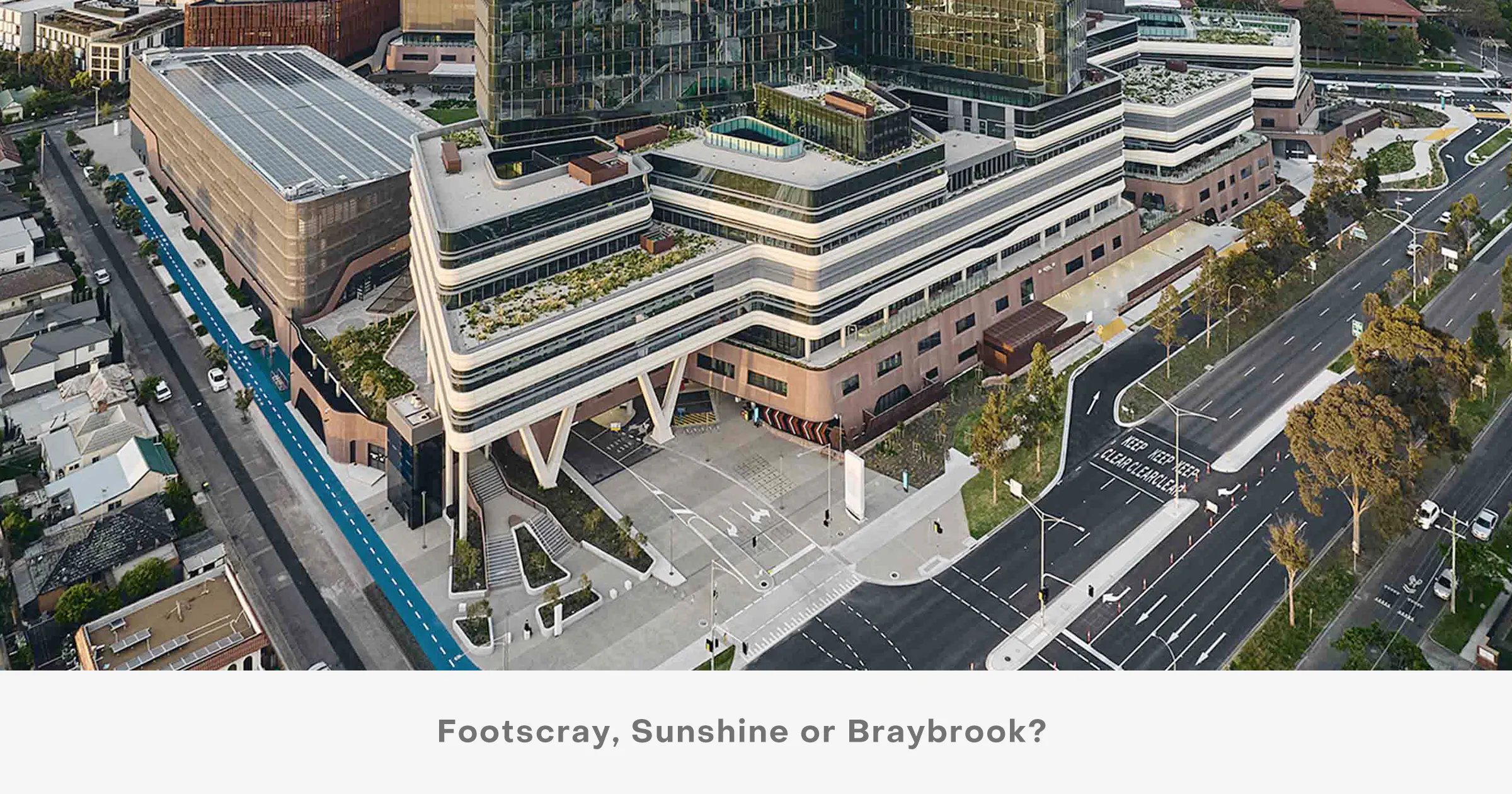
Footscray, Sunshine and Braybrook all suit different Melbourne first home buyer priorities. This guide compares price, lifestyle, infrastructure, property type and long-term risk, helping buyers decide whether lifestyle, growth story or land value matters most.
For a roughly $800,000 budget, Braybrook is the most realistic of the three for buying a house, Sunshine offers the strongest balance of value and confirmed infrastructure upside, and Footscray suits buyers who prioritise established lifestyle, transport and amenity over land size.
Recent suburb data puts median house prices at about $949,000 in Footscray, $860,000 in Sunshine and $770,000 in Braybrook. That makes Sunshine and Braybrook more naturally aligned with an $800,000 first-home buyer brief, while Footscray is more likely to mean a unit, apartment or smaller townhouse.
Sunshine’s advantage is that its infrastructure upside is now more than a planning concept. The West Footscray to Albion Rail Upgrade, the first stage of Melbourne Airport Rail, is a more than $4 billion program across a 6km corridor, with works around Sunshine designed to add new platforms, unlock future airport rail capacity and enable future Melton electrification. Full airport-to-CBD services remain a longer-horizon item, but the Sunshine works themselves are targeted for completion in 2030.
Why the Inner West Divides Opinion
Footscray, Sunshine and Braybrook sit along the same broad western rail corridor, but they are at different stages of change.
Footscray is already recognised by the Victorian Government as a Priority Precinct and the cultural heart of Melbourne’s west. It has stronger established lifestyle amenity, a major food scene, Victoria University campuses and excellent rail access. Victoria University notes that Footscray Station is about 10 minutes by public transport from the city centre, which explains why buyers often pay more for location even when the dwelling is smaller.
Sunshine is earlier in its renewal cycle. The Victorian Government expects Sunshine’s population to more than double over the next 30 years, with much of the growth centred on three hubs: Sunshine Station, Sunshine CBD and Albion Quarter. That is why Sunshine has become the more infrastructure-led first-home buyer option.
Braybrook is more nuanced than simply “cheap and waiting.” The Victorian Planning Authority says the former Braybrook Regeneration Project has been folded into the Activity Centres Program, with Tottenham Station and Central West expected to cover a significant portion of the earlier Braybrook planning work. So Braybrook does have a planning catalyst, but it is more planning-led and gradual than Sunshine’s funded rail-superhub works.
The Airport Rail Effect on Sunshine
Sunshine’s investment case rests on infrastructure that is now physically moving, but buyers need to be precise about what is underway.
The current funded work is Melbourne Airport Rail Stage 1: the West Footscray to Albion Rail Upgrade. It will untangle a complex rail junction, add two new regional platforms at Sunshine Station, improve walking and cycling links, upgrade the bus interchange and create capacity for more than 1,000 trains a day through Sunshine.
That is different from saying trains to Melbourne Airport are about to open. The Stage 1 works are intended to make a future airport line possible, not deliver full airport services immediately. For buyers asking “is Sunshine a good investment?”, the answer is that the upside is tied to a multi-year build program and precinct renewal, not a quick flip.
For a first home buyer, that matters. You are buying into disruption, construction staging and future potential. The reward is that Sunshine has a clearer state-backed growth story than many similarly priced suburbs in Melbourne’s west.
Footscray Apartments vs Houses, and the Braybrook Question
Footscray is the lifestyle pick, but the property type matters.
The gap between Footscray houses and units is large. Recent market data shows Footscray houses around $949,000 and units around $465,000, with houses showing stronger recent growth than units. That does not make every Footscray apartment a bad buy, but it does mean buyers need to be careful about building quality, owners corporation costs, resale depth and comparable sales in the same complex.
For apartment buyers, Forge Real Estate’s guide to strata defects, special levies and owners corporation risks in Melbourne is especially relevant. A cheaper Footscray apartment can be appealing on paper, but the real test is whether the building is financially healthy and whether the floor plan will remain attractive when you resell.
Braybrook, by contrast, gives buyers a better chance of securing land or a family-sized townhouse around the $800,000 mark. Recent data puts Braybrook’s median house price around $770,000, with three-bedroom houses around $760,000 and four-bedroom houses around $900,000. The trade-off is that Braybrook does not yet have Footscray’s established lifestyle density or Sunshine’s confirmed station-superhub profile.
Reading Off-the-Plan Risk: The Luma Living Example
Sunshine North’s LUMA development is a useful case study for off-the-plan due diligence. It is a Development Victoria project delivering around 300 townhouses, with SAW Constructions appointed to deliver 86 townhouses in Stage 1 and 85 new homes in Stage 2.
That gives LUMA a different risk profile from a private high-rise apartment tower, but it does not remove risk. Buyers should still check:
whether the townhouse is strata titled and what the owners corporation fees cover
whether the floor plan has good resale appeal
comparable established townhouse sales nearby
sunset clauses and delay rights
valuation risk at settlement
car parking, storage, natural light and private open space
completion timing and what happens if the market softens before settlement
The stamp duty angle also matters. The State Revenue Office says Victoria’s temporary off-the-plan duty concession applies to eligible strata apartments and townhouses where the contract is signed between 21 October 2024 and 20 October 2026, with no value threshold during that temporary period. Forge’s guide to off-the-plan stamp duty concessions in Melbourne is a useful companion read before relying on the concession as the main reason to buy.
First Home Buyer Budget Reality
An $800,000 budget is awkward in Victoria because it sits just above the main first-home buyer duty thresholds. The State Revenue Office says eligible first home buyers pay no land transfer duty up to $600,000 and receive a concession from $600,001 to $750,000, but purchases above $750,000 fall outside that first-home buyer duty concession.
That means a buyer choosing between Footscray, Sunshine and Braybrook should compare the total cost, not just the headline price. A $745,000 purchase and an $805,000 purchase can feel close in search filters, but they can behave very differently once duty, conveyancing, lender costs, owners corporation fees and post-settlement repairs are included.
This is also where the dwelling type becomes practical rather than theoretical. A Footscray apartment may keep the purchase price well below budget, but could introduce owners corporation and resale concerns. A Braybrook house may stretch less on location but offer land and future flexibility. A Sunshine townhouse may sit in the middle, with infrastructure upside but more exposure to construction-stage and off-the-plan assumptions.
For owner-occupiers with accessibility needs, post-settlement works should be part of the buying budget too. The NDIS describes home modifications as custom-built changes that help people safely access and use their home, including items such as ramps, non-slip surfaces and bathroom access. Buyers planning future ramps, door widening or accessible bathroom changes can factor in advice from Melbourne specialists such as Mobility Access Modifications before choosing between an older house, townhouse or apartment.
What This Means for a First Home Buyer
For a first home buyer choosing between the three suburbs:
Choose Footscray if lifestyle comes first
Footscray suits buyers who want walkability, food, rail access, university links and a more established inner-west feel. At $800,000, the compromise is likely to be property type: apartment, unit, smaller townhouse or a more imperfect house.
Choose Sunshine if you want the infrastructure story
Sunshine is the strongest all-round option for buyers who want value plus a clear government-backed growth catalyst. The Sunshine Superhub and West Footscray to Albion works give it a more defined infrastructure narrative than Braybrook, but the benefits unfold over years.
Choose Braybrook if land and affordability matter most
Braybrook is the best fit for buyers who want a house or larger townhouse and are willing to accept a slower transformation story. Its upside is tied to affordability, proximity to Sunshine and Footscray, and longer-term activity-centre planning rather than one headline project.
For buyers still narrowing the brief, Forge’s guide to where first home buyers can still buy smart in Melbourne in 2026 is a helpful next step. Suburb-level pricing, infrastructure timing, off-the-plan risk and house-versus-townhouse trade-offs are exactly where a Melbourne buyer’s advocate such as Forge Real Estate typically assists first home buyers comparing Footscray, Sunshine and Braybrook.
Forge Real Estate Melbourne can help you blueprint your future by finding the perfect blue-chip property where your lifestyle needs and investment goals converge.
📞 Phone: (03) 91003633
✉️ Email: info@forgeproperty.com.au
🌐 Website: www.forgerealestate.com.au
We offer specialized consultation and can assist in both Mandarin and Cantonese.
Related Articles

Melbourne's Buyer's Market 2026: How Much Room Is There to Negotiate $20k–$50k Off Asking?
Yes, in most of Melbourne's inner-city and middle-ring suburbs in mid-2026, offers $20,000–$50,000 below the asking price are realistic and often accepted—provided they're supported by comparable sales rather than guesswork. Melbourne has clearly shifted…

Sold at Auction — or Was It? Understanding Underquoting, Dummy Bids and Your Rights at a Melbourne Auction
Buying at auction in Melbourne is governed by strict Victorian laws designed to protect buyers and promote transparency. Real estate agents must provide a Statement of Information (SOI) with a genuine estimated selling price and three comparable recent sales,…

Buying an Apartment or Unit in Melbourne: Are Strata and Owners Corporation Fees a Trap or a Smart Entry Point?
Buying an apartment or unit in Melbourne isn't inherently a poor investment. While some apartment markets have softened, the biggest risk is rarely the property type itself—it's buying into a poorly managed Owners Corporation (OC) with inadequate financial…