
Stamp Duty, Land Tax and the 2026 Victorian Election: What Changes for Melbourne Buyers and Investors?
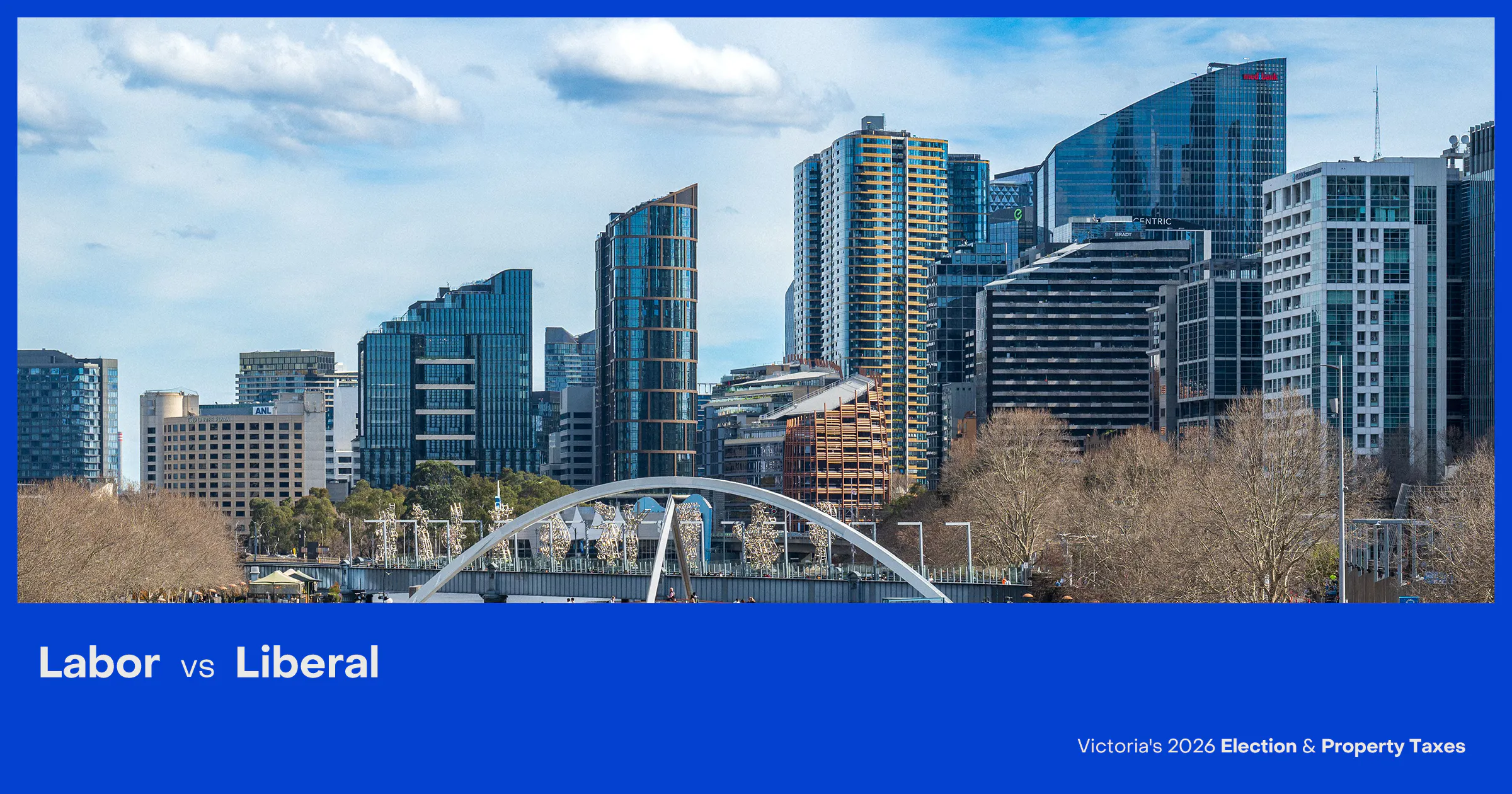
Both major parties have promised to restore Victoria's $300,000 land tax threshold, and the Coalition proposes a first-home buyer stamp duty exemption up to $1 million. Here is what that means for Melbourne buyers and investors, including the current Victoria stamp duty rates, land tax bands and the cost of waiting.
Could the November 2026 Victorian election save Melbourne first-home buyers tens of thousands of dollars in stamp duty and reduce annual land tax bills for property investors? For anyone weighing up Victoria stamp duty and land tax costs in Melbourne, the answer sits in the policy detail rather than the campaign slogans.

With Victoria heading to the polls on 28 November 2026, property taxation has become an important election issue.
Both major parties have proposed reversing Victoria's controversial land tax threshold reductions, while the Liberal-National Coalition has also pledged to expand stamp duty exemptions for eligible first-home buyers purchasing properties up to $1 million.
For Melbourne buyers and investors, these promises could have meaningful financial implications.
But there is an important distinction: election promises are not yet law, and not every property owner would benefit equally.
Here is what the proposed changes mean, who stands to benefit and whether buyers should consider waiting until after the election.
What's Changing in Victoria's Property Tax Debate?
Victoria's property tax system imposes two major costs on property purchasers and investors:
- Stamp duty (land transfer duty): a one-off tax generally paid when purchasing property.
- Land tax: an annual tax generally levied on the combined taxable site value of land an owner holds, excluding exempt properties such as a qualifying principal place of residence.
According to the Victorian State Revenue Office, stamp duty is calculated primarily on the property's dutiable value, while land tax is calculated using taxable site values.
These two taxes affect buyers differently. Stamp duty influences the amount of cash needed to purchase, whereas land tax affects ongoing ownership costs.
The upcoming election has put both taxes under scrutiny.
Victoria's 2026 Election: Labor vs Coalition Property Tax Policies
The two major parties have outlined different approaches to property tax relief.
- Land tax threshold: Labor proposes restoring it to $300,000 in stages; the Liberal-National Coalition proposes restoring it to $300,000 over five years.
- Starting threshold: both parties start from the current $50,000 threshold.
- First-home buyer stamp duty: Labor retains the existing $600,000 exemption and concessions to $750,000; the Coalition proposes an exemption for eligible homes up to $1 million.
- Implementation: both parties describe progressive changes that require legislation.
Labor's 4 October 2026 policy announcement promises staged restoration of the $300,000 threshold and relief beginning in its first budget after re-election.
The Coalition has outlined a five-year land tax threshold restoration, alongside its first-home buyer stamp duty commitment. These commitments have been reported in The Australian's election policy coverage and its coverage of Coalition tax proposals.
Labor's published policy describes a six-year relief program, although some reporting describes a longer timetable for reaching the final $300,000 threshold. The exact annual schedule and legislative commencement dates should therefore be confirmed before buyers rely on the proposed savings.
Stamp Duty in Victoria: How Much Do First-Home Buyers Currently Pay?
Working out Victoria stamp duty starts with two figures: the purchase price and where the property sits in relation to the first-home buyer thresholds.
Under the current State Revenue Office first-home buyer rules, eligible purchasers receive:
- A full stamp duty exemption on properties valued at $600,000 or less.
- A partial stamp duty concession on properties valued above $600,000 and up to $750,000.
- No general first-home buyer duty concession for properties above $750,000.
Eligible first-home buyers must also satisfy requirements relating to previous ownership, occupancy and other circumstances.
For many Melbourne buyers, the $750,000 concession ceiling creates a significant financial threshold.
A buyer purchasing an $800,000 established home generally faces standard stamp duty, even if this is their first property.
How Much Could Buyers Save Under the Coalition's $1 Million Proposal?
If the Coalition's proposed full exemption is introduced as described, eligible first-home buyers purchasing properties up to $1 million could avoid substantial upfront duty.
Illustrative savings based on Victoria's current general transfer duty rates:
- $750,000 purchase: $40,070 current standard duty; saving depends on the existing first-home concession.
- $800,000 purchase: $43,070 current standard duty; up to $43,070 potential saving.
- $900,000 purchase: $49,070 current standard duty; up to $49,070 potential saving.
- $1,000,000 purchase: $55,000 current standard duty; up to $55,000 potential saving.
Calculations use the Victorian general land transfer duty rates and assume a full exemption applies under the proposed policy. The Coalition's final eligibility criteria, contract dates and implementation arrangements have not yet been legislated. Other exemptions and surcharges may change individual outcomes.
For someone purchasing an $850,000 Melbourne home, the standard duty is approximately $46,070. Eliminating that expense would reduce the cash required at settlement significantly.
However, potential savings depend on the legislation eventually passed, including whether the rules apply to contracts signed before commencement.
Victoria Land Tax Changes 2026: Why Investors Are Paying Attention
Victoria land tax rates and thresholds are the numbers investors are watching, because the cost falls on the combined taxable site value a person holds.
While stamp duty reforms would primarily affect purchasers, the proposed land tax changes may matter most to existing investors.
Victoria's general land tax threshold was reduced from $300,000 to $50,000 under the state's COVID debt repayment measures.
As a result, more owners of investment properties and other taxable land became liable for annual land tax.
The State Revenue Office's current land tax rates provide the following general tax bands:
- Below $50,000 total taxable site value: $0.
- $50,000 to below $100,000: $500.
- $100,000 to below $300,000: $975.
- $300,000 to below $600,000: $1,350 plus 0.3% above $300,000.
- $600,000 to below $1 million: $2,250 plus 0.6% above $600,000.
These figures are for the general land tax scale, not the separate trust or absentee-owner surcharge scales.
Example: An Investor With $250,000 in Taxable Land Value
Consider a Melbourne investor holding one investment property with a taxable site value of $250,000.
Under the current general rates, the annual land tax is $975.
If the threshold is eventually restored to $300,000 and the owner qualifies under the new rules, their general land tax liability on this holding could fall to zero.
That represents a potential saving of $975 annually.
Over five years, a constant $975 annual saving would amount to $4,875, assuming the relevant exemption applied throughout that period.
However, both parties are proposing staged changes. The full annual saving may therefore not become available immediately.
What About Investors With Multiple Properties?
Land tax generally applies to the combined taxable site value of relevant properties owned by the same person or entity.
For example, an investor with two taxable properties, each carrying a site value of $250,000, would ordinarily be assessed on a combined $500,000 site value rather than receiving a separate $300,000 threshold for each property.
At the current general rates, $500,000 of taxable land produces an annual bill of approximately $1,950.
Restoring the tax-free threshold to $300,000 does not necessarily mean this investor's liability would fall by $975 or disappear altogether.
The eventual tax saving will depend on the complete revised rate schedule, aggregation rules and any surcharges.
For property investors, this is why land tax reform should be evaluated across an entire portfolio, not one property at a time.
Does Land Tax Apply to Your Family Home?
In many cases, an eligible principal place of residence is exempt from Victorian land tax.
According to the State Revenue Office, this exemption generally applies where the property is genuinely used as the owner's principal home and the relevant conditions are satisfied.
However, land tax can still be relevant to:
- Investment properties.
- Holiday homes that are not exempt.
- Certain vacant landholdings.
- Properties owned through companies or trusts.
Separate rules may also apply to vacant residential land tax, trust surcharges and absentee-owner surcharges.
The proposed general land tax threshold increase should not be confused with the abolition of these other taxes.
Should Melbourne Buyers Purchase Before or After the November Election?
For first-home buyers, the prospect of saving $55,000 in stamp duty may be a strong reason to review purchase timing.
But delaying a purchase solely on the expectation of a future exemption introduces risk.
Scenario 1: Buying Before the Election
A buyer purchasing an $850,000 home under current legislation should budget for approximately $46,070 in standard stamp duty, subject to eligibility for any other concessions.
The advantage is certainty about the rules in force when signing the contract.
The disadvantage is that the buyer may miss a future concession if the incoming government introduces one without retrospective eligibility.
Scenario 2: Waiting Until After the Election
The buyer may have more clarity about which party will form government and which property tax reforms are likely to be pursued.
However, an election victory does not make a tax exemption immediately available.
Legislation, commencement dates and eligibility conditions may still need to be settled.
Even after the election, the buyer may need to wait before being able to take advantage of a new scheme.
Scenario 3: Property Prices Change While You Wait
Tax savings should also be weighed against market movements.
If a buyer delays purchasing an $850,000 property and its price rises by 5%, the new purchase price becomes $892,500 — an increase of $42,500.
That could offset much of a potential stamp duty saving.
Conversely, if prices fall, waiting could produce benefits beyond tax relief.
Neither outcome is guaranteed.
The smarter decision is to compare the total financial cost of both scenarios, rather than looking at stamp duty savings in isolation.
Which Melbourne Suburbs Could Benefit From a $1 Million Stamp Duty Exemption?
If a future first-home buyer exemption covers purchases up to $1 million, it could be particularly relevant in suburbs where houses and townhouses commonly transact in the $1 million range.
Potential areas for further research include:
Langwarrin and Melbourne's South-East
Langwarrin offers an established residential setting, family housing and access to the broader Frankston area.
With REA Group modelling placing its typical house value around $875,000 in October 2026, it is an example of a suburb where a broader stamp duty exemption could materially improve upfront affordability for eligible buyers.
Mickleham and the Northern Growth Corridor
Mickleham offers newer housing stock and access to Melbourne's expanding northern suburbs.
While many properties may already fall within existing concession thresholds, larger homes and higher-priced properties could benefit from an expanded exemption.
Buyers should still consider future housing supply, infrastructure delivery and ongoing ownership costs.
Frankston and Surrounding Suburbs
Frankston and nearby suburbs offer a mixture of established housing, townhouses and apartments at different price points.
For buyers purchasing above the existing $750,000 concession ceiling, a future exemption could make a meaningful difference to total acquisition costs.
Melbourne's Western Growth Corridors
Areas such as Rockbank, Aintree and surrounding western suburbs may appeal to first-home buyers seeking newer housing.
However, the availability of undeveloped land and future competing supply should be considered before assuming long-term capital growth.
A potential stamp duty saving should never be the sole reason for choosing a suburb.
What the Election Means for Melbourne Property Investors
For investors, a higher land tax threshold could improve annual cash flow, particularly for owners whose combined taxable land values fall below the proposed $300,000 limit.
But holding costs are only one part of an investment's performance.
Investors should also assess:
- Rental income and vacancy risk.
- Mortgage interest rates and repayments.
- Owners corporation fees, insurance and maintenance.
- Property management expenses.
- Council rates and compliance obligations.
- Potential capital growth and resale liquidity.
Investors purchasing apartments should pay particular attention to building condition and future capital expenditure requirements.
Property modifications can also influence long-term ownership costs. Where accessibility work is contemplated, specialists such as Mobility Access Modifications can help owners understand potential adaptations, subject to feasibility and approvals.
Even if land tax falls, an investment with high maintenance costs or weak rental demand may still underperform.
How Forge Real Estate Helps Buyers and Investors Prepare
At Forge Real Estate, we focus on helping clients understand the financial implications of property decisions rather than reacting to election headlines.
Stamp Duty and Purchasing Cost Analysis
We help buyers assess acquisition costs under current rules and compare potential future tax scenarios.
For eligible first-home buyers, understanding the difference between a $750,000 property and a $900,000 property may be particularly important if exemption thresholds change.
Investment Portfolio and Land Tax Insights
For existing investors, we review the relationship between land value, rental returns and holding costs.
Where tax changes may affect investment decisions, clients should obtain advice from a qualified tax adviser using the final legislation.
Suburb Research and Buyer Advocacy
Forge helps purchasers identify opportunities based on recent comparable sales, location fundamentals and realistic market value.
Whether buying before or after an election, the objective is the same: purchase a suitable property at a sustainable price.
The Bottom Line: Will the 2026 Victorian Election Make Property More Affordable?
Victoria's proposed property tax reforms could offer meaningful benefits to both first-home buyers and investors.
For eligible first-home buyers, the Coalition's proposed stamp duty exemption up to $1 million could save tens of thousands of dollars in upfront costs.
For investors, both major parties' commitments to restore the $300,000 land tax threshold could reduce annual holding expenses, particularly for owners with relatively modest taxable landholdings.
But these benefits are not yet guaranteed.
The election outcome, legislative details, eligibility conditions and commencement dates will determine the real financial impact.
A good property decision should make sense under today's laws — with any future tax relief treated as a potential benefit, not a certainty.
Planning to buy or invest in Melbourne around the 2026 Victorian election?
Disclaimer: Updated 26 October 2026. This article provides general information about Victorian residential property, auctions and property taxation, not legal, financial, tax or valuation advice. Obtain independent advice before signing a contract, bidding or making an investment decision; rules, thresholds and election policies can change.
Contact Forge Real Estate for property market insights, buyer advocacy and guidance on evaluating potential opportunities before committing to your next purchase.
Forge Real Estate Melbourne can help you blueprint your future by finding the perfect blue-chip property where your lifestyle needs and investment goals converge.
📞 Phone: (03) 91003633
✉️ Email: info@forgeproperty.com.au
🌐 Website: www.forgerealestate.com.au
We offer specialized consultation and can assist in both Mandarin and Cantonese.
Related Articles

Passed In Again? How to Beat Underquoting at Melbourne Auctions in 2026
Melbourne auction clearance rates fell to about 52% in the week ending 17 October 2026, with 127 properties passed in out of 389 reported auction results. Here is how Victoria's new reserve price disclosure rules change what a passed-in result means, how underquoting is assessed, and how to negotiate with the vendor afterwards.

Should I Buy Now or Wait? What Melbourne's 2026 Property Market Slump Means for First-Home Buyers
Melbourne house prices are down around 5.2% from the March 2026 peak, with forecasts pointing to further falls and auction clearance rates softening. We model the real cost of waiting — from rent and savings to rate scenarios — so first-home buyers can decide from their own numbers.

Buying Your First Melbourne Apartment: Owners Corporation Fees, Special Levies and Hidden Costs
Buying your first Melbourne apartment means understanding the building as well as the home. Compare owners corporation fees, maintenance funding, special levies, defect reports and meeting minutes. This eight-question guide helps you investigate future ownership costs, with practical examples and checks to discuss with your conveyancer and building adviser.