
How Will RBA Rate Hikes in 2026 Affect Melbourne Property Prices for Buyers, Sellers and Investors?
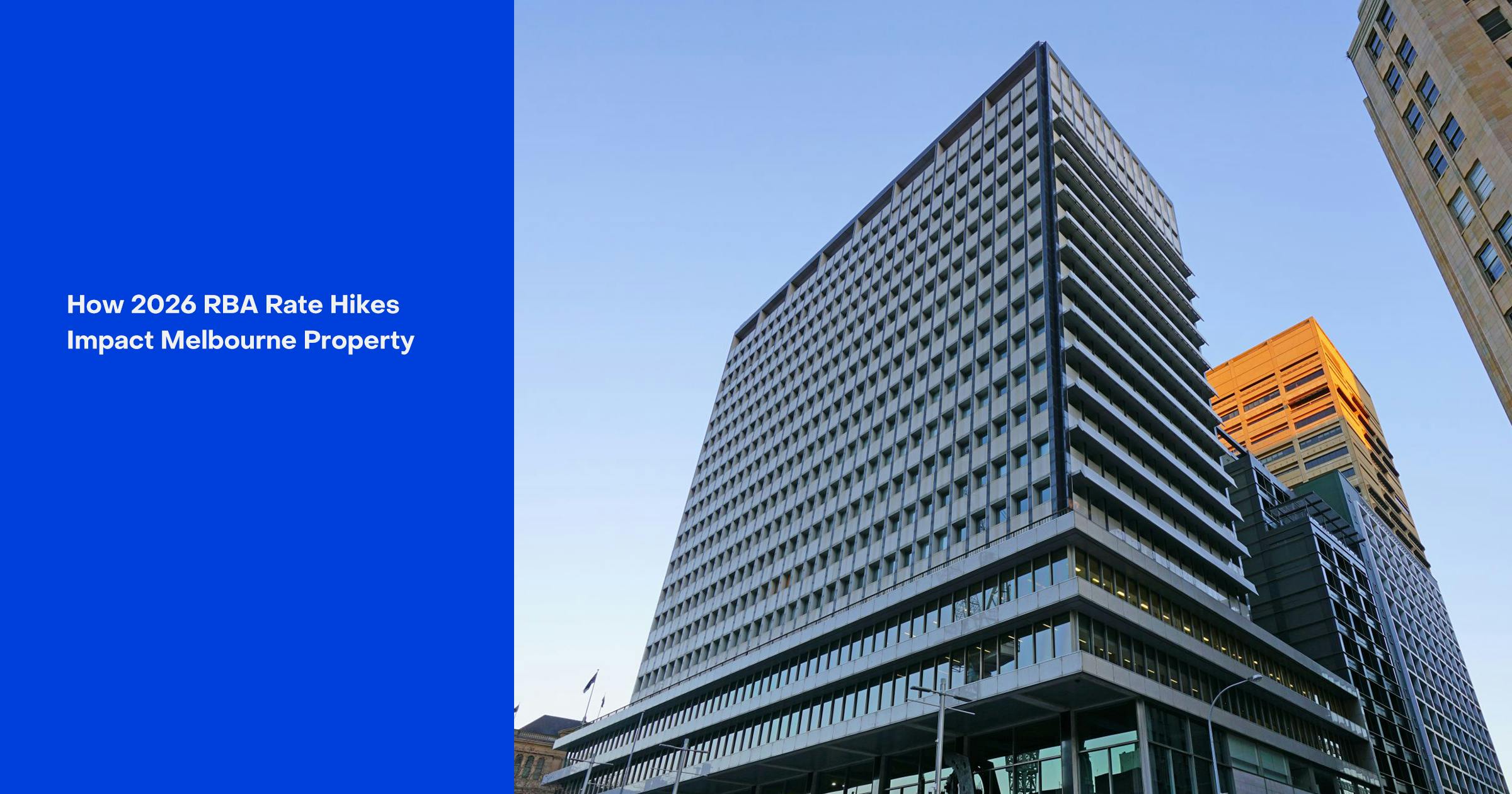
Melbourne’s property market reacts differently to RBA rate hikes. Higher interest rates reduce borrowing power, soften auction competition and increase mortgage stress, especially in outer growth suburbs. This article explains how 2026 cash rate rises may impact buyers, sellers and investors across Melbourne, with practical tips on timing, suburbs and risk management.
When the Reserve Bank of Australia (RBA) raises the cash rate in 2026, Melbourne property prices typically respond through reduced buyer borrowing power, softer auction competition and slower capital growth compared to supply-constrained markets like Brisbane or Perth. Rate rises can reduce borrowing capacity, which translates to lower clearance rates, longer days-on-market and modest price corrections—particularly in outer growth corridors and rate-sensitive family suburbs across Melbourne's north and west.

Why Melbourne Property Prices React Differently to Rate Rises
Melbourne's housing market in 2026 can react differently to rate rises because borrowing costs feed quickly into buyer budgets and sentiment. The RBA sets the cash rate as its operational target and it influences other interest rates (including mortgage rates), though the pass-through is not always one-for-one across all borrowers and products (RBA overview; RBA analysis of mortgage-rate pass-through).
Each 0.25% increase in the RBA cash rate can put upward pressure on variable mortgage rates, affecting repayments and borrowing limits. For a household borrowing $700,000 at 6.5%, a half-percentage-point hike adds roughly $240 per month to repayments. That extra $2,880 per year forces buyers to either bid lower, extend their search timeline or exit the market entirely, creating downward pressure on auction reserves and private-sale expectations. (You can test repayment changes using the ASIC MoneySmart mortgage calculator.)
How Rate Hikes Change Borrowing Power and Auction Behaviour
Lenders assess serviceability using a buffer—currently around 3%—above the actual loan rate. When the cash rate climbs, that buffer compounds, shrinking pre-approval limits faster than buyers anticipate.
This dynamic is visible at weekend auctions: when affordability tightens, participation and bidding intensity can fade, and properties can pass in if vendor expectations lag the new affordability ceiling. Underquoting—where advertised price guides sit below realistic sale ranges—becomes particularly contentious during rising-rate cycles, as buyers discover their maximum bid no longer reaches the undisclosed reserve. Transparent pricing and realistic appraisals become critical to avoid wasted marketing campaigns and buyer frustration.
Mortgage Stress and the "Should I Buy Now or Wait?" Question
Mortgage stress in Melbourne refers to households spending more than 30% of gross income on home loan repayments. This “30%” framing is commonly used in Australian housing affordability reporting (noting it is often applied most directly to lower-income households): see the Australian Institute of Health and Welfare on housing stress (and the related AHURI explanation of stress measures). Rate hikes push borderline borrowers over that threshold, especially those who purchased at peak prices in 2021–2022 with minimal equity buffers. For prospective buyers asking "should I buy in Melbourne now or wait," the answer depends on personal circumstances: locked-in employment, deposit size and whether renting costs less than projected mortgage repayments after further rate rises.
Waiting for prices to fall further carries risk if supply tightens or the RBA pauses. Buying now with a conservative borrowing buffer—say, stress-testing repayments at 7.5% even if the current rate is 6.5%—provides a margin of safety against future hikes and protects against forced sale if income drops.
Suburb-Level Impacts: Where Rate Sensitivity Varies
Outer growth estates with high proportions of first-home buyers and investors using maximum leverage—Wollert, Clyde North, Rockbank—typically see sharper price corrections during rate-rise cycles. Established inner and middle-ring suburbs with strong school zones, such as Kew, Ivanhoe or Yarraville, hold value better due to limited stock and demand from equity-rich upgraders less affected by serviceability squeezes.
A licensed agent or buyer’s advocate with local transaction data can help identify which pockets remain supply-constrained versus those vulnerable to oversupply, and support suburb-specific stress-testing so buyers avoid overcommitting in rate-sensitive areas while recognising resilient micro-markets where fundamentals support stable pricing.
Forge Real Estate Melbourne can help you blueprint your future by finding the perfect blue-chip property where your lifestyle needs and investment goals converge.
📞 Phone: (03) 91003633
✉️ Email: info@forgeproperty.com.au
🌐 Website: www.forgerealestate.com.au
We offer specialized consultation and can assist in both Mandarin and Cantonese.
Related Articles

Buying a Melbourne Apartment? The Owners Corporation and Inspection Checks Nobody Warns You About
A fast-accepted offer on a Melbourne apartment is not automatically a red flag. Review the owners corporation certificate, meeting minutes, finances, maintenance history, title plan and inspection findings before your contract becomes unconditional.

Melbourne’s New Reserve Price Rule: Why Underquoting Is About to Get Harder to Hide
Victoria’s new reserve price rules begin on 1 October 2026, with disclosure requirements for auctions and fixed-date sales from 16 October. Learn what the changes mean for Melbourne buyers, underquoting concerns, passed-in properties and pre-auction due diligence.

The $950k Sweet Spot: How First-Home Buyers Are Winning Melbourne’s Unit Market
For Melbourne first-home buyers, the $950,000 5% Deposit Scheme cap is a ceiling, not a target. Compare units, villas, townhouses and houses by suburb, stamp duty, ownership costs and resale demand before deciding what fits your budget.